Menopause Blood Test UK: Do You Need a Blood Test for Perimenopause or Menopause?
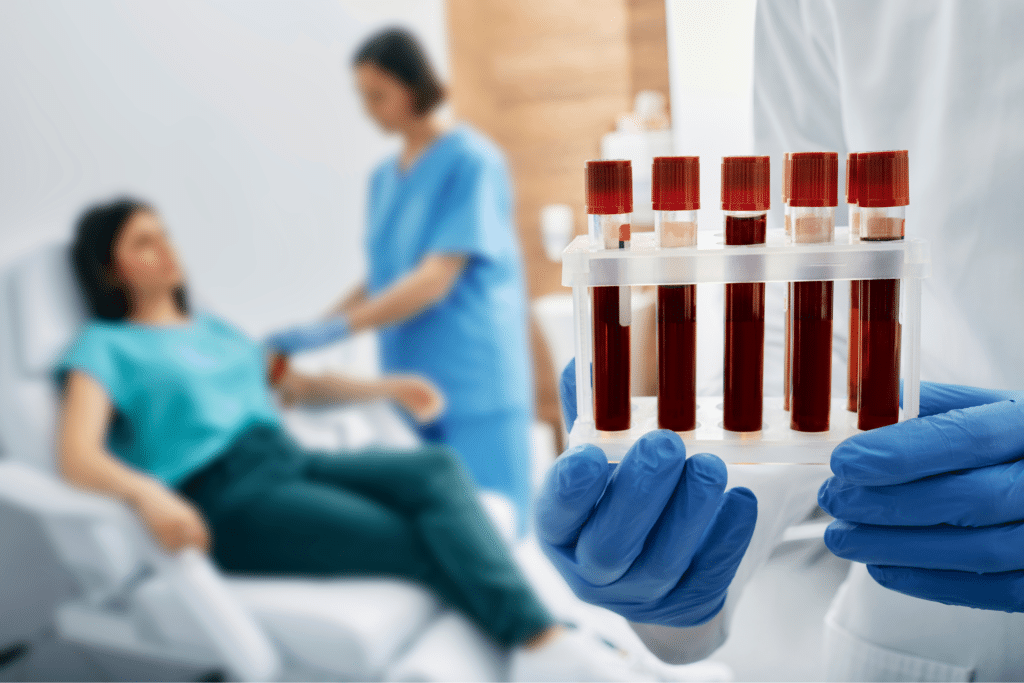
Menopause and perimenopause have become some of the most widely discussed areas of women’s health in the UK. As awareness has increased, so has the number of women looking for answers about symptoms such as tiredness, hot flushes, changes in their periods, difficulty sleeping, low mood and problems with concentration.
One of the most common questions is:
“Can a blood test tell me if I am going through menopause?”
The answer is not always as straightforward as people expect.
Blood tests can play an important role in investigating certain symptoms and health concerns. However, a hormone blood test is not routinely required to diagnose menopause in every woman.
In this guide, we explain when a menopause blood test may be considered, what your healthcare professional might request and how mobile blood collection can make completing a requested blood test more convenient.
What Is Perimenopause?
Perimenopause is the period of hormonal change leading up to menopause.
During this stage, hormone levels can fluctuate significantly. Some people experience noticeable symptoms while others experience relatively few changes.
Common symptoms can include:
- Irregular periods
- Hot flushes
- Night sweats
- Difficulty sleeping
- Mood changes
- Anxiety
- Problems with memory or concentration
- Headaches
- Reduced sex drive
- Vaginal dryness
- Muscle and joint discomfort
- Tiredness
Perimenopause can begin several years before a person’s final menstrual period.
Menopause itself is generally reached when a person has not had a period for 12 consecutive months and is not using hormonal contraception that affects their periods.
Can a Blood Test Diagnose Menopause?
Sometimes—but not always.
For otherwise healthy women aged over 45 who have typical menopause symptoms, UK clinical guidance generally does not require a hormone blood test to diagnose perimenopause or menopause.
This is because hormone levels can fluctuate considerably during perimenopause.
A hormone measurement taken on one particular day may therefore provide only a snapshot of what your hormones are doing at that moment.
Your GP or healthcare professional will often consider factors such as:
- Your age
- Your symptoms
- Changes to your menstrual cycle
- Your medical history
- Any medication or contraception you use
For many women over 45, this clinical picture can provide more useful information than a single hormone result.
When Might a Menopause Blood Test Be Requested?
There are situations where a healthcare professional may decide that blood testing is appropriate.
For example, blood tests may sometimes be considered when menopause symptoms occur at a younger age.
A healthcare professional may investigate possible early menopause when symptoms develop before the age of 45.
Further investigation can be particularly important when menopause is suspected before the age of 40.
Your clinician will determine which tests are appropriate based on your circumstances.
What Is an FSH Blood Test?
FSH stands for follicle-stimulating hormone.
FSH is produced by the pituitary gland and is involved in regulating the menstrual cycle and ovarian function.
As ovarian activity changes approaching menopause, FSH levels can change.
This is why people searching online for information about menopause frequently encounter the term FSH blood test.
However, FSH levels can fluctuate during perimenopause. One result should therefore not normally be interpreted on its own without considering your age, symptoms, menstrual history and other relevant factors.
Your healthcare professional can determine whether an FSH test is appropriate for you.
Are Other Blood Tests Useful During Perimenopause?
This is an important distinction.
You may not need a blood test specifically to “prove” that you are experiencing perimenopause, but a healthcare professional might request other blood tests when investigating symptoms.
Why?
Because symptoms commonly associated with menopause can sometimes overlap with other health conditions.
Thyroid Function Tests
Changes in thyroid function can cause symptoms that may resemble some experiences associated with perimenopause.
These may include:
- Tiredness
- Changes in weight
- Mood changes
- Difficulty concentrating
- Changes in heart rate
- Changes to menstrual periods
A clinician may therefore request thyroid testing when appropriate.
Full Blood Count
A full blood count, often abbreviated to FBC, measures different types of cells within your blood.
It is a common blood test and may be requested when investigating symptoms including persistent tiredness.
Iron and Ferritin
Iron is essential for several important functions within the body.
Ferritin is commonly used as a marker of the body’s stored iron.
For someone experiencing heavy periods, tiredness or other relevant symptoms, a healthcare professional may decide to investigate their iron status.
Blood Glucose or HbA1c
Blood glucose tests help healthcare professionals assess blood sugar levels.
HbA1c provides information about average blood glucose levels over a longer period.
Testing may be recommended depending on your symptoms and individual risk factors.
Cholesterol
Midlife is also an important time to consider cardiovascular health.
A lipid profile measures different fats within the blood, including cholesterol.
Whether you require cholesterol testing will depend on factors such as your age, health history and cardiovascular risk.
Vitamin Levels
Vitamin deficiencies can sometimes contribute to symptoms such as fatigue.
Your healthcare professional may recommend specific investigations where clinically appropriate rather than automatically testing every vitamin.
What About Private Menopause and Hormone Test Kits?
Private blood testing has become increasingly popular across the UK.
Numerous laboratories and healthcare providers now offer hormone, women’s health and wellness panels.
Some require only a finger-prick sample.
Others require a venous blood sample, meaning blood needs to be collected from a vein by a trained healthcare professional.
This is where a mobile phlebotomy service can be particularly useful.
If you have purchased a private blood test kit that requires venous collection, you do not necessarily have to find a traditional clinic and arrange your day around travelling there.
A professional phlebotomist can come to your home or another suitable location to collect the required sample.
How Does Mobile Blood Collection Work?
Mobile phlebotomy separates the collection of the blood sample from the laboratory that performs the actual testing.
For example, you may:
- Receive a blood test request from your GP, specialist or healthcare provider.
- Receive a private blood testing kit from a laboratory or testing company.
- Arrange an appointment with a mobile phlebotomist.
- Have the required venous sample collected.
- Have the sample prepared according to the instructions provided.
- Send or deliver the sample to the designated laboratory according to the agreed arrangements.
- Receive your results from the healthcare provider or testing company responsible for your test.
BloodSample360 provides the blood collection element of this process.
We do not diagnose menopause or interpret your results. Questions about diagnosis, treatment and the meaning of your results should be discussed with the healthcare professional responsible for your care.
What Should You Have Ready Before Your Appointment?
If you are arranging a blood draw for a private menopause or hormone test, check your testing provider’s instructions carefully.
You may need:
- Your blood test request form
- Your private testing kit
- The correct collection tubes
- Laboratory paperwork
- Labels
- Packaging
- Collection instructions
Some tests may also need to be collected at a particular time.
Do not assume that all hormone tests have the same requirements.
Always follow the instructions supplied by your doctor, laboratory or testing provider.
Do You Need to Fast Before a Hormone Blood Test?
Not necessarily.
Whether fasting is required depends on the tests that have been requested.
A hormone test alone may have different requirements from a larger health panel containing cholesterol, blood glucose or other biomarkers.
Never fast simply because you are having a blood test unless your healthcare provider or laboratory has instructed you to do so.
If you are unsure, contact the organisation that requested or supplied the test before your appointment.
Why Choose an At-Home Blood Draw?
Going through menopause or dealing with unexplained symptoms can already disrupt your routine.
Travelling to a clinic, finding parking and spending additional time in waiting rooms may be inconvenient.
Mobile phlebotomy provides another option.
Convenience
Your blood can be collected at your home or another suitable location.
Flexible Scheduling
Appointments can be arranged around work, family commitments and other responsibilities.
Useful for Private Test Kits
If you have already purchased a private test that requires venous collection, a mobile phlebotomist can provide the professional blood draw needed to complete the kit.
Helpful for People Who Find Travelling Difficult
At-home blood collection can also be valuable for people with mobility difficulties or those who find repeated journeys to healthcare facilities challenging.
Professional Venous Collection
Some private tests require more blood than a finger-prick kit can conveniently provide or require specific tubes.
A trained phlebotomist can collect venous samples according to the instructions provided with your test.
Should Everyone Going Through Menopause Order Hormone Tests?
No.
More testing does not automatically mean better healthcare.
If you are over 45 and experiencing typical symptoms of perimenopause or menopause, hormone blood testing may not be needed to establish what is happening.
The most appropriate starting point is often discussing your symptoms with a qualified healthcare professional.
Blood testing becomes useful when there is a specific clinical question that the result can help answer.
When Should You Speak to Your GP?
Contact your GP or another qualified healthcare professional if you are concerned about menopause symptoms, particularly if they are affecting your daily life.
Professional advice is particularly important if:
- You develop symptoms before age 45
- You suspect menopause before age 40
- Your periods change significantly
- You have unusually heavy bleeding
- You have symptoms that concern you
- You are unsure whether your symptoms are related to menopause
- You want to discuss treatment options
A blood collection service should never replace appropriate medical assessment.
Have You Already Been Given a Blood Test Request?
If your GP, private doctor, consultant or testing provider has already requested blood tests, the next challenge is often finding a convenient place to have the blood taken.
BloodSample360 provides professional mobile blood sample collection across Manchester, Cheshire and surrounding areas.
Our phlebotomists can visit your home, workplace or another suitable location to collect blood for eligible GP-requested tests and compatible private testing kits.
You must have the appropriate blood test request form or private test kit before your appointment.
The requesting healthcare provider or laboratory remains responsible for the tests, results and medical interpretation.
Book a Mobile Blood Collection Appointment
If you have been asked to complete a menopause-related, hormone or other blood test and need professional venous blood collection, BloodSample360 can bring the appointment to you.
Avoid unnecessary travel and complete your blood draw in a familiar environment at a time that fits your schedule.
Book your BloodSample360 mobile phlebotomy appointment today and have your blood sample professionally collected at home or another convenient location.
This article is provided for general information and should not be used as a substitute for personalised medical advice, diagnosis or treatment. Speak to a qualified healthcare professional if you have concerns about your health or menopause symptoms.